The Windows of Saint Andrew’s
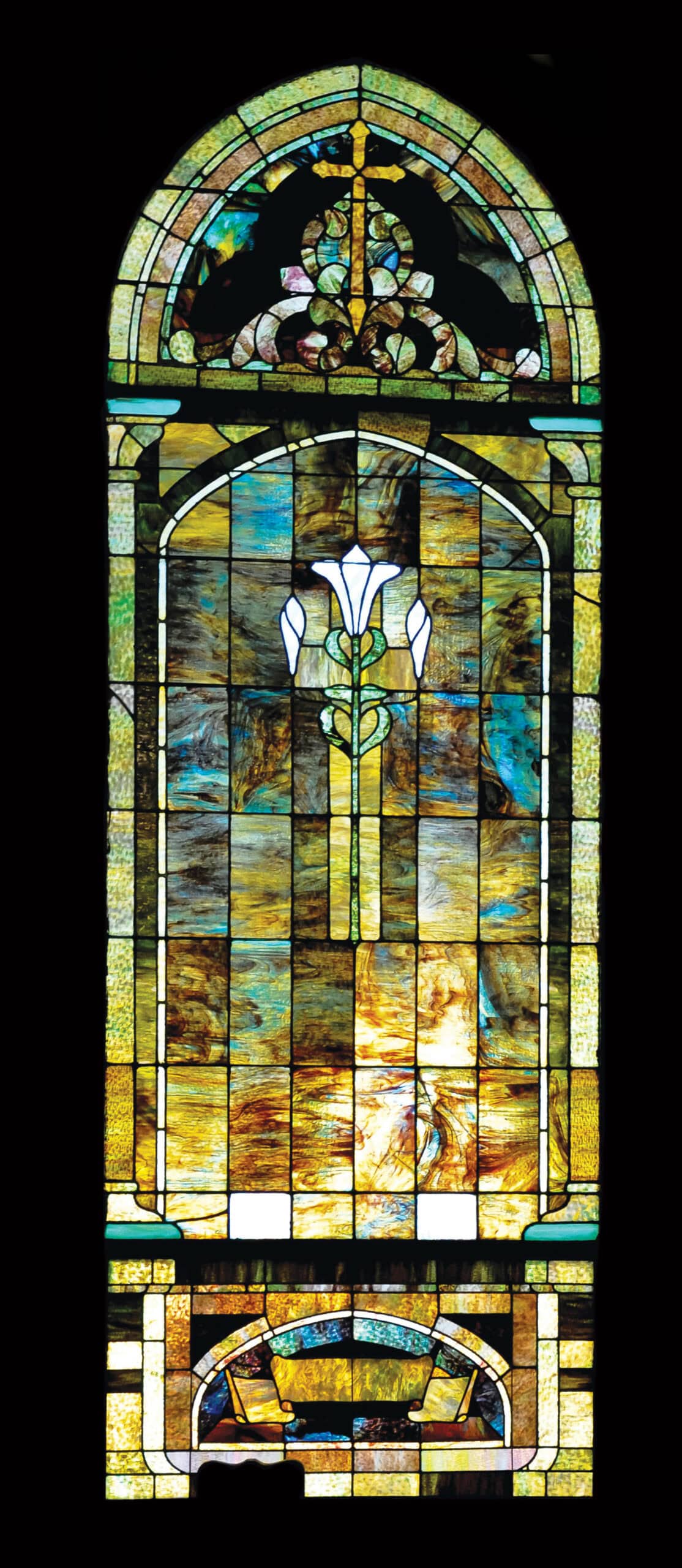
The stained glass windows of Saint Andrew’s are a beautiful expression of faith, memory, and artistry. Nine pictorial windows depict scenes from the life of Christ and the Church, while opalescent lily and cross windows fill the space with shifting color and light.
Crafted from custom-rolled glass with hand-painted details, these windows were created by the Jacoby Art Glass Co. of St. Louis and J. Wippell & Co. of Exeter, England. Throughout the day, they transform as they reflect and refract light, offering a different experience of color and beauty.
Many were given in memory of parishioners, serving as enduring reminders of those who have shaped the life of this community. The lily, a recurring symbol in the windows, represents purity, hope, and new life in Christ.
The Last Supper
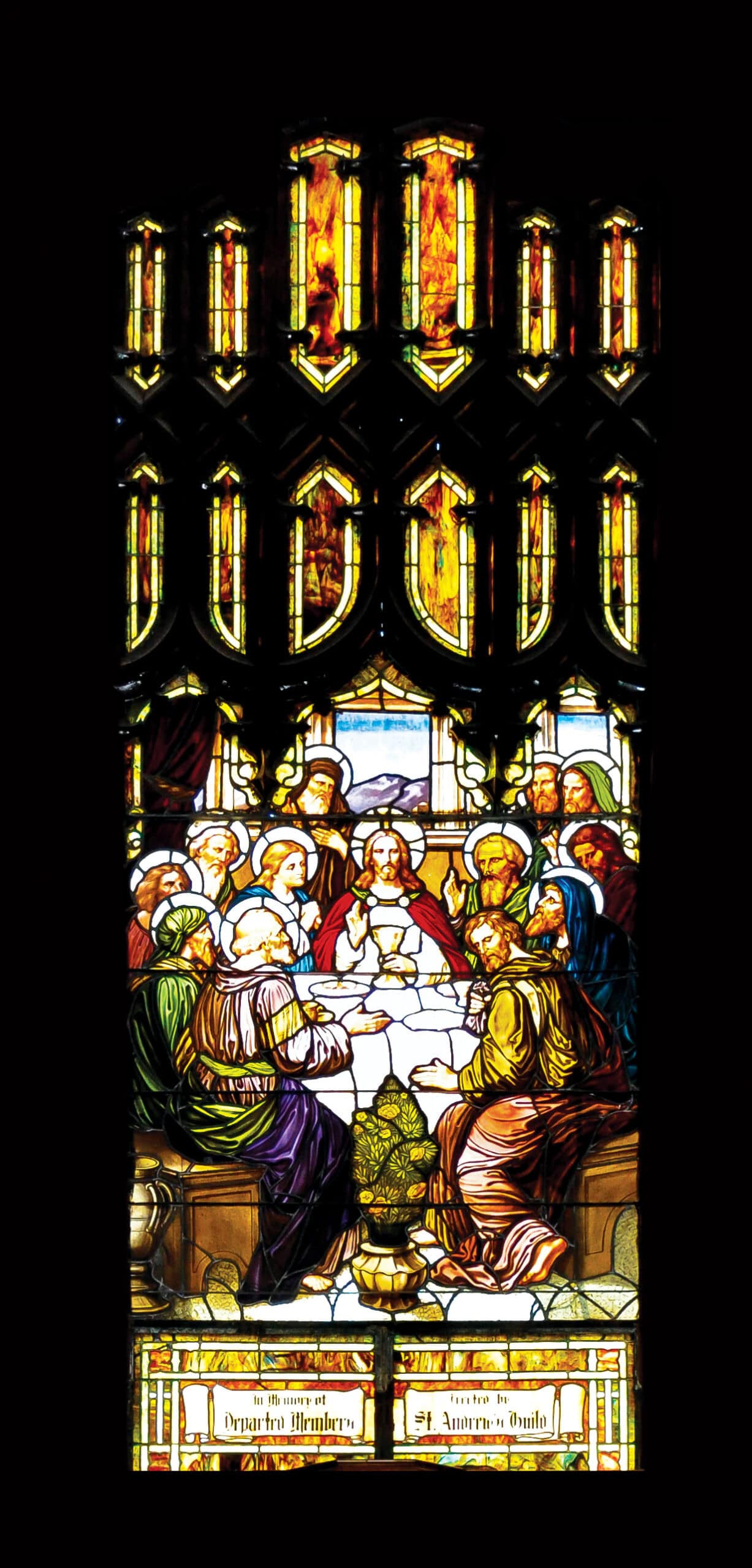 The large central window above the altar depicts the Last Supper. In it, we see the twelve disciples gathered with Jesus in the upper room. In the right foreground sits Judas, who betrayed Jesus. He is holding a bag of silver, has turned away, and wears no halo. He is looking at a yellow rose, a symbol of deceit and betrayal in stained glass works. Jesus is the only figure wearing a red cloak, which he also wears in the Calming of the Waters and Ascension windows. Red, evoking blood, is the color of martyrdom and Christ’s death on the Cross. As a symbol of fire, red is also the color of the Holy Spirit.
Saint Andrew
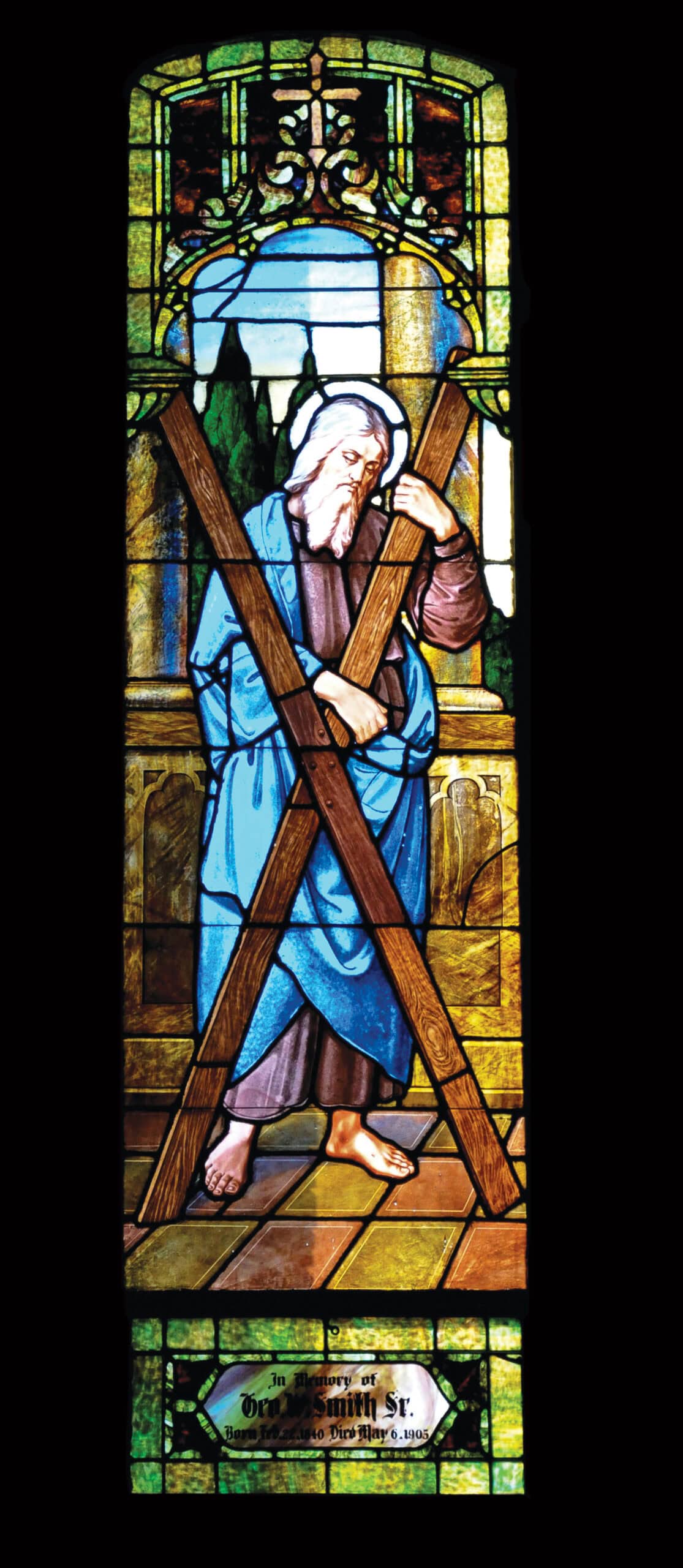 To the left of The Last Supper Window, is the window of Saint Andrew, patron saint of the parish. Andrew is remembered as being one of the first four of the twelve apostles. He was martyred in Greece during the reign of the Roman Emperor Nero. His feast day, November 30, commemorates his death. Andrew is nearly always depicted as an old man with a long white beard, either holding an X-shaped cross or crucified on it. It is said he requested to be put to death in this manner because he felt he was unworthy to be crucified in the same manner as Christ.
Jesus Saves Peter from the Stormy Sea
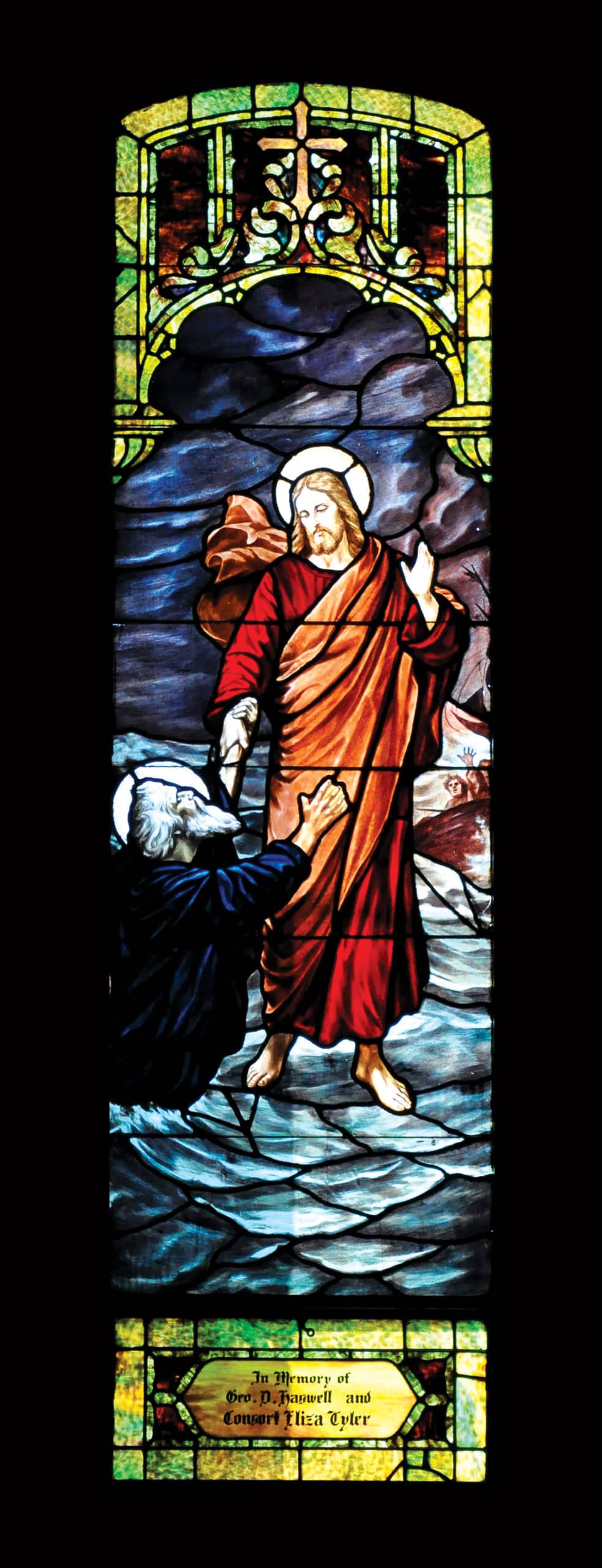 The window on the right of the Last Supper depicts Jesus saving Peter from drowning in the Sea of Galilee. Miraculously, Jesus walks on water to reach the sinking boat, astounding the fishermen in the background. He then calms the water to rescue the frightened Peter. The power of the wind is evident in Jesus’s billowing cloak and the turbulent water behind them. The artist used lighter shading and shaping of the glass at Jesus’s feet to flatten the water’s appearance, contrasting with the much darker clouds in the background.
The Nativity
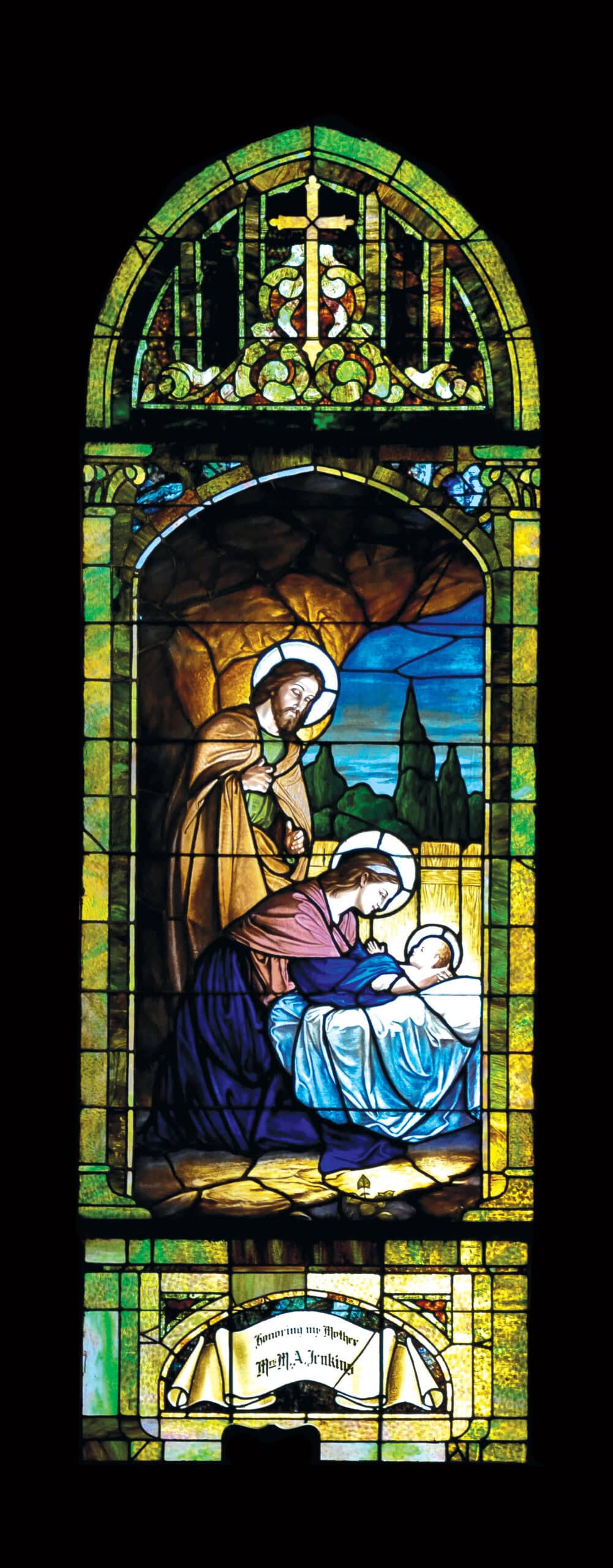 The loving family depicted at the birth of Christ reflects both dignity and serenity despite the manger setting. Mary is wearing a brilliant blue undergarment and a reddish mantle. The color blue has deep roots in the Bible and, over time, has come to represent royalty, transcendence, innocence, and divinity. Mary is seen as the Queen of Heaven and Earth in blue. At the bottom of the picture, a small cluster of ivy creeps across the stone floor. Christian symbolism considers ivy’s need for support as symbolic of humanity’s need for divine support. It also symbolizes Jesus as the source of everlasting life and the destroyer of death.
“Suffer the Little Children”
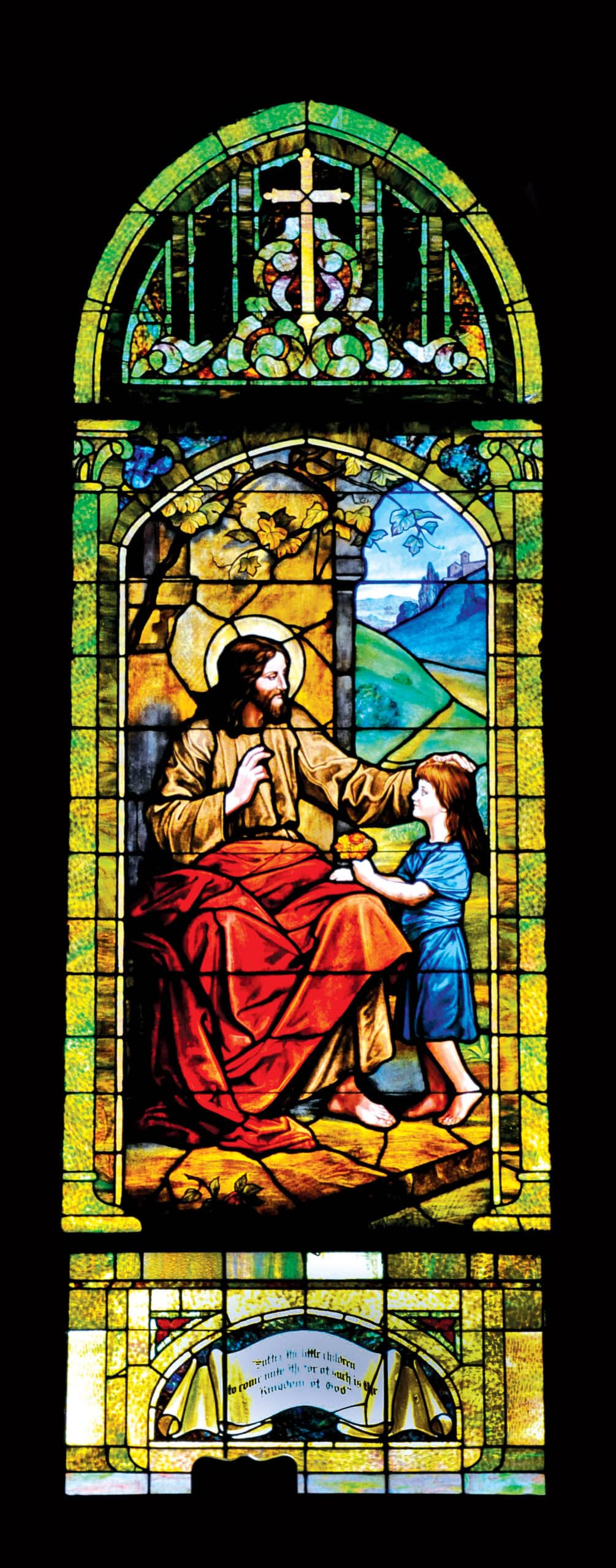 The window depicts the passage from the New Testament in which Jesus says, “Suffer the little children to come unto me, for such is the Kingdom of God.” The divinity of Christ is indicated by the halo; the little girl has no halo, but her blue robe suggests her innocence. Jesus is blessing the child with the traditional gesture to her head. A red rose is tucked into the bottom left corner, symbolizing his coming martyrdom. The hilltop castle is more suggestive of an Italian hill town rather than Israel, but transporting Biblical scenes to familiar settings was common in early stained glass.
The Transfiguration
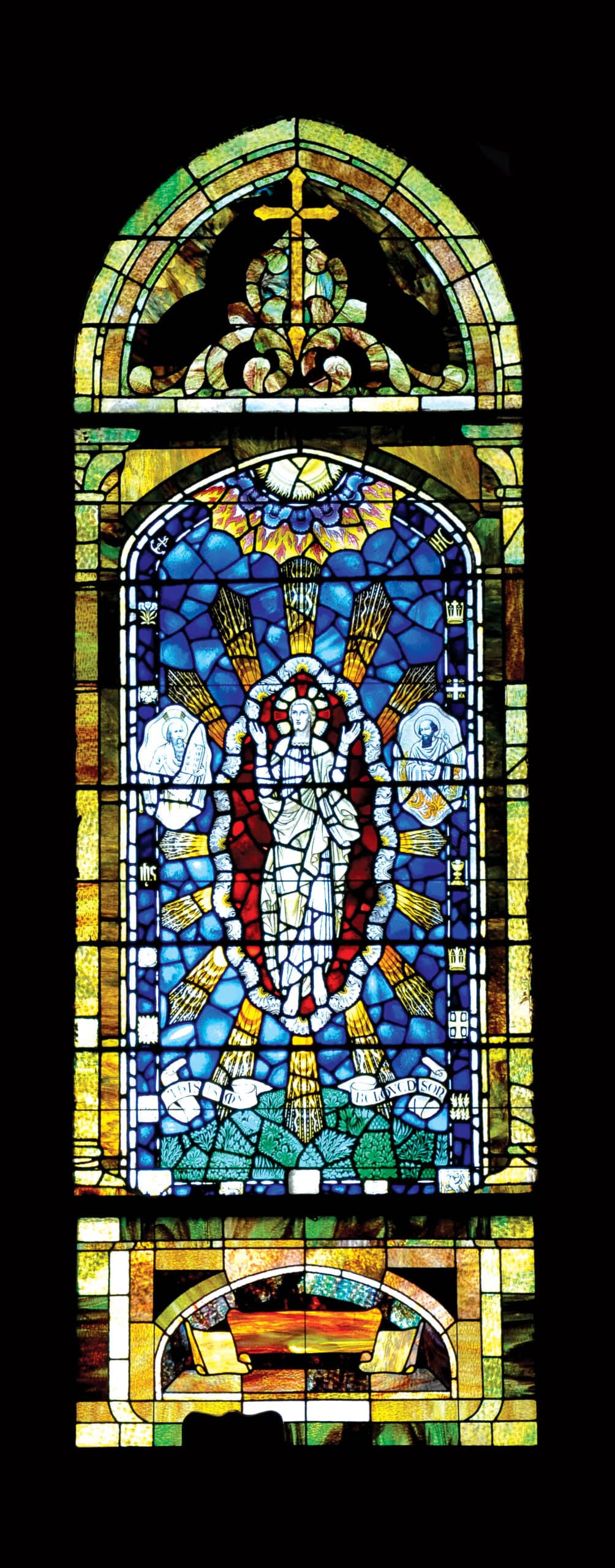 Stylistically different from all the others, this window has the most colorful history of any of Saint Andrew’s windows. Oral tradition has embellished the story, but the original window was damaged by lightning in March 1937. The replacement was crafted by the English company Wippell & Co. The window depicts the moment when God reveals Christ’s true identity to Peter, James, and John. He was suddenly “transfigured before them” when his clothes and face began to shine as Moses and the prophet Elijah appeared on either side of him. This is portrayed in the radiant golden beams surrounding Christ. The nineteen medallions in the border depict well-known Christian symbols, especially various combinations of Greek letters for “Jesus” or “Christ.”
The Crucifixion
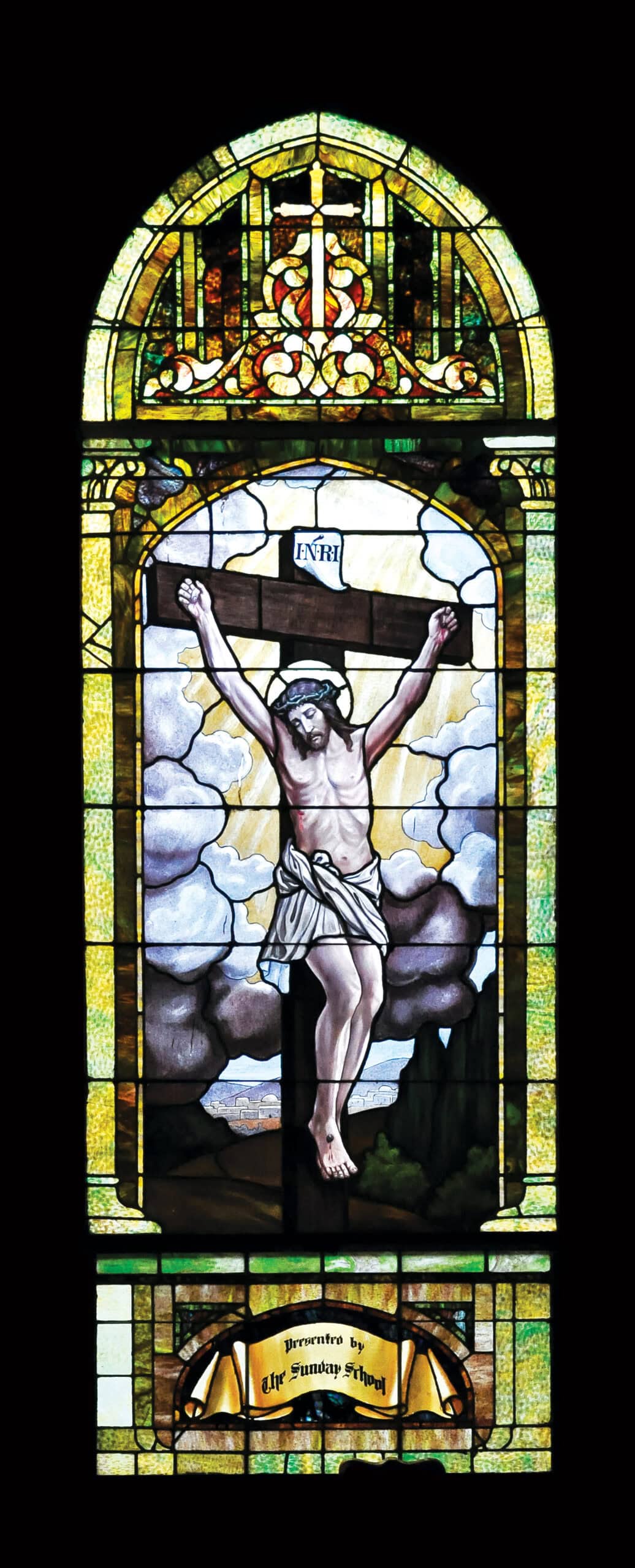 Portraying the fragility and vulnerability of Christ in human form, He is seen here with only hints of blood from the wound in His side and on His hands and feet. The face is serene and unscarred, almost as though He is asleep. The placard attached at the top of the cross bears the inscription “INRI,” the Latin abbreviation for “Jesus of Nazareth, King of the Jews.” The Roman prefect Pontius Pilate ordered the plaque to be attached to Christ’s cross. A delicate miniature landscape of Jerusalem is visible in the background at Christ’s feet below ominous clouds.
The Resurrection
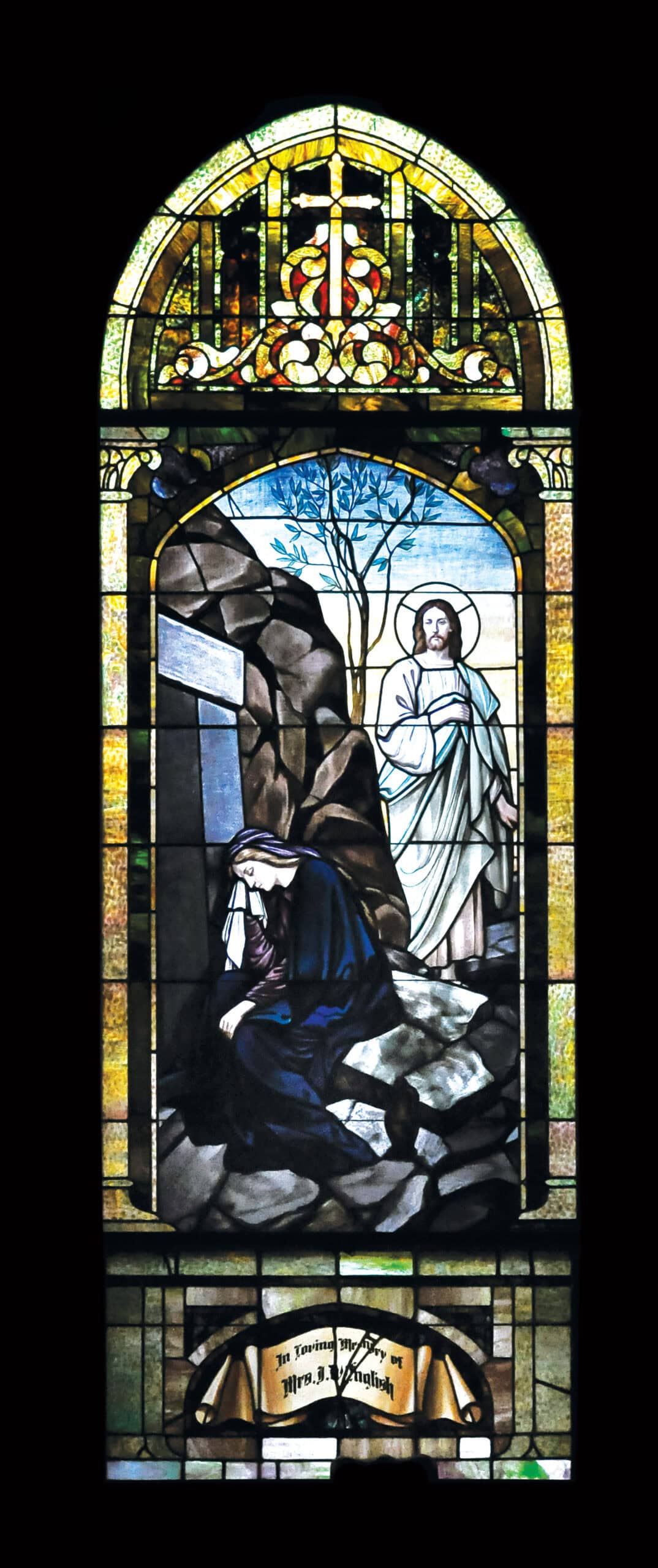 Mary Magdalene is shown at daybreak weeping at the open tomb of Jesus, just before she turns around and sees the risen Lord. The robes of Jesus are light and ethereal, for although He has risen from the dead, He has not yet ascended into Heaven. Mary’s face, with its pale complexion, and her white handkerchief, are the visual focal point. The large jug at her feet is the pictorial clue that she planned to anoint the body of Christ. Unlike some others, there is no background landscape – only a small tree which perhaps represents the Tree of Life.
The Ascension
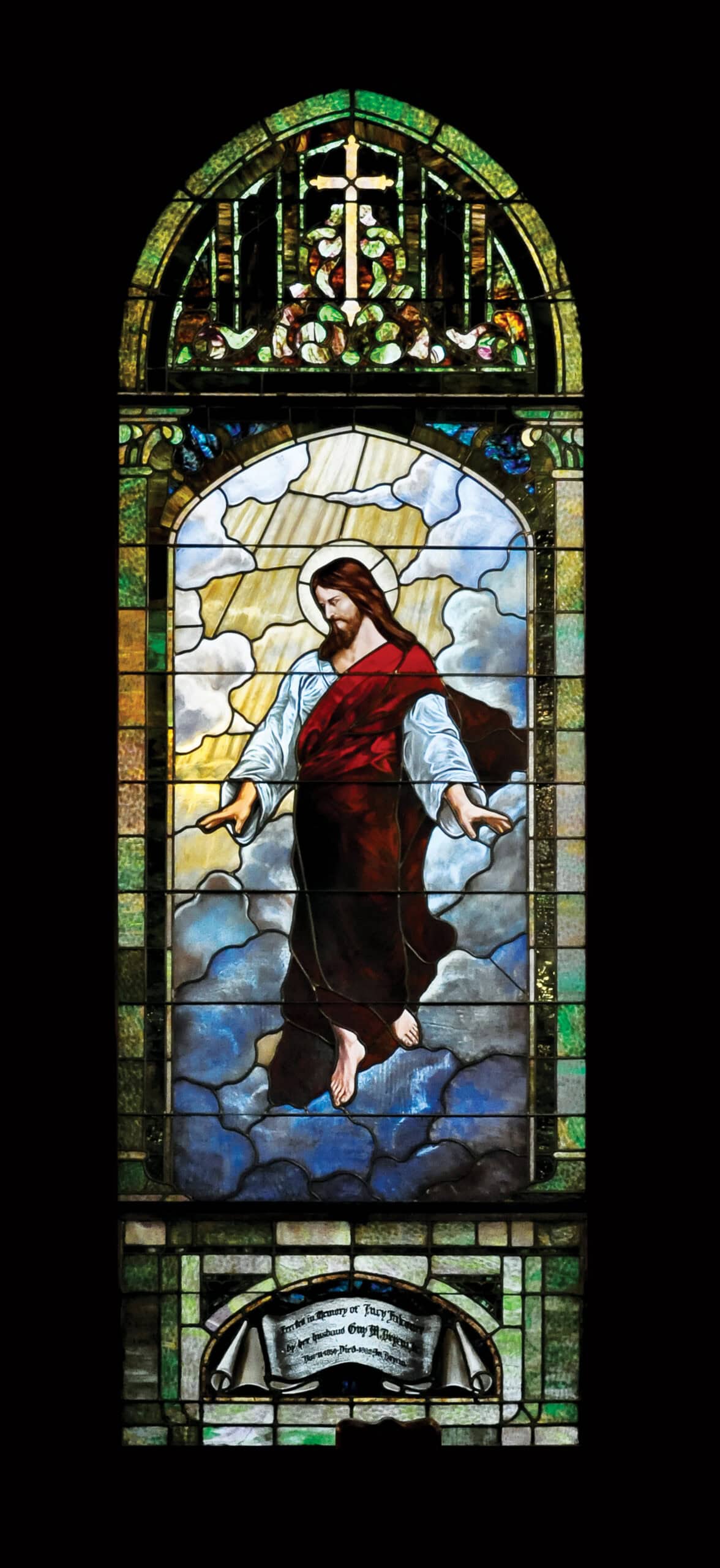 Christ’s ascension into Heaven is the theme of perhaps the most beautiful and beloved of Saint Andrew’s windows. The Ascension is often portrayed with Christ surrounded by throngs of angels, but the image here is magnificent in its simplicity. There is no landscape or earthly background, just clouds and golden shafts of light surrounding the triumphant risen Christ as He ascends toward Heaven. The deep red color of Christ’s robes symbolizes redemption, payment for the sins of the world through His blood and suffering. For many years, the children of Saint Andrew’s have kept alive the tradition that Jesus has six toes on his right foot.